
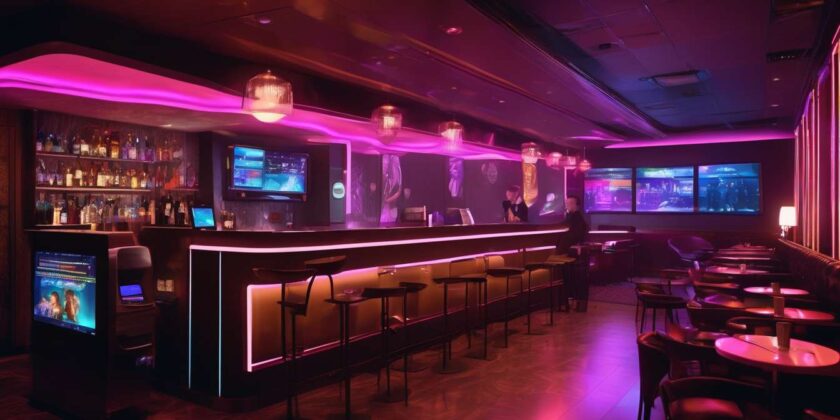
Just as smart lighting transformed concert stages, similar tech investments are redefining adult entertainment venues.
We’ve watched lighting rigs, advanced sound design, and integrated show-control systems migrate from mainstream performance spaces into clubs and lounges, and the effects are profound:
- Improved customer experience through immersive, dynamic environments.
- Streamlined operations via centralized control of lights, audio, and effects.
- Measurable revenue gains from more engaging shows and repeat visits.
By connecting access control, point-of-sale (POS), reservation systems, and analytics platforms, we’ve achieved several operational improvements:
- Reduced wait times through better queue and capacity management.
- Optimized staffing based on demand forecasts and real-time data.
- Enhanced safety with coordinated entry/exit and incident monitoring — implemented without sacrificing atmosphere.
Our teams have learned to balance technology with patron expectations:
- Discreet surveillance techniques that protect safety while respecting privacy.
- Cashless payments that speed transactions and increase spend, implemented in ways that respect tipping culture.
- Immersive AV solutions that elevate performances without overwhelming talent or guests.
These unexpected connections between theater-grade technology and nightlife operations are prompting managers to rethink capital allocation and long-term strategy.
We’re collectively navigating three key challenges to modernize venues while preserving their character:
- Regulatory concerns — ensuring systems comply with local laws on surveillance, payments, and licensing.
- Training requirements — upskilling staff to operate and maintain sophisticated tech stacks.
- ROI expectations — measuring outcomes to justify investments and guide phased deployment.
The goal is clear: modernize venues in ways that make them more efficient, compliant, and profitable while preserving the unique character of adult entertainment.
Lighting and Atmosphere
We create immersive, comfortable lighting and atmosphere to boost guest satisfaction and operational efficiency.
We design LED scenes that welcome diverse patrons and signal safety without feeling clinical.
- This ensures everyone feels like they belong while avoiding a sterile or institutional look.
- Scenes are crafted for comfort, inclusivity, and a subtle sense of safety.
We tie lighting presets to venue automation to reduce manual tasks and ensure consistency across shifts.
- Presets automate transitions between service modes (opening, peak, quiet, closing).
- Automation minimizes staff intervention and keeps ambiance consistent for all guests.
We provide integrated controls so scenes can be adapted for special events or changing occupancy.
- Staff can quickly select or schedule scenes for events, peak hours, or quieter moments.
- This preserves intimacy and comfort while allowing operational flexibility.
We coordinate layout and lighting with cashless payment areas to reduce clutter and improve transaction flow.
- Well-lit, uncluttered payment zones speed transactions and keep guests relaxed.
- Faster, smoother flow strengthens guest loyalty and reduces friction at busy points.
We balance mood lighting with clear sightlines to support surveillance compliance without intruding on privacy.
- Strategic fixture placement reduces blind spots and aids monitoring.
- Lighting is designed to support safety and staff oversight while maintaining guest comfort and discretion.
Overall, our lighting strategy creates a welcoming, efficient environment where staff can focus on service and patrons can relax, connect, and return.
Sound and Show Control
We design centralized sound and show-control systems that let staff cue music, lighting effects, and AV transitions quickly and reliably.
These systems keep performances smooth and audiences engaged by providing low-latency, redundant networking so cues never drop and performers can trust the gear.
We build workflows that let teams collaborate confidently.
- Stage managers, DJs, and technicians share a single interface.
- Everyone feels included and knows their role.
Our systems integrate with venue automation platforms to sync scenes, trigger playlists, and log events for consistent show timing.
We connect show-control logs with operational systems to support reporting needs tied to cashless payments and patron movement,
- without crossing into entry-control specifics.
For venues subject to regulation, we add audit-friendly features to demonstrate surveillance compliance.
- Timestamped event records
- Secure access logs
By simplifying operation and offering clear, shared tools, we strengthen team cohesion, reduce on-shift stress, and deliver performances that feel polished and inclusive every night.
Access and Entry Systems
We design robust access and entry systems that let staff control doors, VIP areas, and back-of-house zones securely and with minimal friction.
We integrate badge, biometric, and mobile credentialing so team members feel empowered and trusted while patrons move smoothly through shared spaces.
Our approach ties into venue automation to synchronize lighting, signage, and HVAC with door states, creating a cohesive environment where everybody knows their place and role.
We enforce tiered access policies that respect privacy and safety, and we log events for clear incident review.
We coordinate with surveillance compliance standards so footage and access logs align with regulatory requirements without alienating staff or guests.
We prioritize simple workflows for onboarding and offboarding personnel, reducing errors and fostering a sense of belonging among teams.
While we support modern user experiences, we avoid complicating routines — keeping interfaces intuitive and controls responsive, so staff can focus on hospitality rather than managing tech.
Cashless Transactions
We’re moving to streamlined cashless transaction systems that speed purchases, reduce theft risk, and give us clearer financial visibility.
We’re adopting integrated venue automation that ties point-of-sale, mobile ordering, and loyalty programs into a single experience so everyone feels included and served quickly.
Cashless payments let us minimize handling errors and reconcile nightly totals with less stress, which strengthens trust among staff and regulars.
We’re careful to design systems that respect patron privacy while meeting regulatory needs.
- Surveillance compliance is built into transaction logs and audit trails without exposing personal data unnecessarily.
We train our teams together on using terminals, managing refunds, and assisting patrons who prefer alternative options, reinforcing a shared commitment to accessibility.
- Training covers:
- Terminal operation and troubleshooting.
- Refund and dispute procedures.
- Assisting patrons who need non-digital or alternative payment options.
By standardizing hardware and payment partners across shifts, we reduce friction and create predictable routines that customers and staff appreciate.
The result is smoother operations, safer cash profiles, and a welcoming atmosphere where everyone knows the system works for them.
Surveillance and Safety
We’re upgrading camera, sensor, and incident-report systems to proactively deter misconduct, speed emergency response, and protect patrons and staff while preserving privacy.
We’re implementing venue automation that ties motion sensors, access controls, and alerting so we can detect unusual activity without intrusive constant monitoring.
We’ll integrate systems with cashless payments data where appropriate to reconcile incidents and timelines, while keeping financial detail separated to respect patron anonymity.
We’re prioritizing surveillance compliance by following local laws, minimizing retained footage, and using role-based access so only authorized team members review sensitive material.
We’ll run regular audits and maintain transparent policies so everyone who works and visits here feels confident about safety and rights.
Our operational goals are:
- Fast, proportionate responses to threats.
- Clear chains of custody for evidence.
- Clear guidelines for data handling.
By marrying smart sensors, careful video practices, and accountable procedures, we strengthen trust and belonging while reducing risk and improving incident resolution.
Staffing and Training Tech
We’ll deploy training platforms and staffing tools that use role-based e-learning, shift-optimization, and real-time competency tracking to keep staff skilled, compliant, and rostered where they’re needed most.
We build inclusive onboarding that makes every team member feel seen and supported.
- Pair microlearning modules with hands-on coaching so people progress confidently.
- Create clear milestones and quick wins to accelerate competence and reduce anxiety.
Our staffing tech links to venue automation to simplify shift management and certification tracking.
- Automate shift swaps and approvals.
- Manage certifications and expiry alerts.
- Alert managers proactively when coverage gaps threaten service or safety.
We train teams on cashless payment workflows and dispute handling so transactions are smooth and patrons are treated respectfully.
Compliance is everyone’s priority, so we integrate surveillance-compliance checkpoints into curricula — teaching legal standards, privacy safeguards, and incident-reporting procedures without creating fear.
We use competency dashboards to identify mentors, celebrate growth, and match shifts to individual strengths.
- Highlight emerging leaders and skill gaps.
- Use data to align staffing with people’s strengths, improving belonging and retention.
By combining practical learning, fair scheduling, and system integrations, we keep operations reliable and our people empowered to deliver welcoming, professional experiences.
Analytics and Revenue Insights
We’ll turn data into actionable revenue strategies by tracking spend patterns, optimizing pricing and promotions, and forecasting demand in real time.
We gather transaction and foot-traffic signals across systems — venue automation, cashless payments, and loyalty platforms — to create a single source of truth.
We surface which nights, areas, and offerings drive the most revenue and then test targeted promotions to raise yield without alienating our community.
We use cohort analysis to understand repeat patron behavior and lifetime value so we can tailor experiences that make everyone feel welcome.
Real-time dashboards let managers reallocate staff, adjust stage times, and tweak prices on the fly.
We integrate operational telemetry with compliance metadata — without delving into regulatory strategy — to ensure analytics respect surveillance compliance constraints while preserving customer privacy.
By centering data on people, not just numbers, we build revenue growth that supports sustainable, inclusive venue operations and keeps our team and guests aligned around shared success.
Regulatory Compliance Strategies
We’ll map applicable regulations and embed compliance controls into our systems and processes so operations stay lawful, auditable, and minimally disruptive to guest experience.
We’ll build a clear compliance roadmap that aligns venue automation, cashless payments, and surveillance compliance with local licensing, age‑verification, data‑protection, and labor rules.
We’ll assign responsibilities, document procedures, and keep an audit trail so everyone on our team knows what’s required and why it matters.
We’ll configure automation to enforce occupancy limits, shift reporting, and access controls while preserving a welcoming atmosphere.
We’ll select cashless payments platforms that meet payment‑card and privacy standards, and we’ll limit retained data to what regulators allow.
We’ll implement surveillance compliance by standardizing camera placement, retention periods, and access logs, and by training staff on lawful monitoring and evidence handling.
We’ll review policies periodically, engage counsel when rules shift, and involve frontline team members in updates so compliance becomes a shared practice that reinforces trust with guests and regulators.
How do venue technology investments impact performer privacy and consent protocols beyond basic surveillance and safety systems?
We’re asking how tech investments affect performer privacy and consent protocols beyond basic surveillance and safety systems.
We’ll redesign access controls, data retention, and identity verification to center performer autonomy.
- Redesign access controls so performers decide who can access their data and under what conditions.
- Implement data-retention policies that minimize storage, provide clear retention windows, and offer secure deletion on request.
- Use identity-verification methods that respect anonymity choices (pseudonymous options) and avoid unnecessary linkage of personal identifiers.
We’ll build consent logging that performers can review and revoke.
- Maintain tamper-evident consent records that show when and how consent was given.
- Provide performers with simple interfaces to review, download, and revoke consents.
- Ensure revocation triggers downstream actions (data access removal, deletion where appropriate, and notification of affected parties).
We’ll train staff on digital boundaries and limit biometric use.
- Train staff on respectful handling of performer data, minimizing access, and honoring consent choices.
- Encrypt sensitive records both at rest and in transit, with strict key management and access auditing.
- Limit biometric use to cases with clear performer consent, strong necessity, and robust safeguards; prefer less intrusive alternatives where possible.
We’ll involve performers in policy design so everyone feels respected, safe, and included.
- Create participatory processes for policy and tech design (advisory committees, consultations, and pilot tests).
- Publish clear, plain-language policies and offer ongoing opportunities for feedback and revision.
What are the long-term maintenance and upgrade costs for integrated venue technologies, and how should venues budget for hardware/software lifecycle replacement?
Summary of long-term maintenance & upgrade budgeting approach
Estimated annual maintenance costs
- Annual maintenance: Plan for 10–20% of initial hardware cost per year.
- Software subscriptions: Include recurring license and cloud service fees separately from hardware maintenance.
- Upgrade sprints: Budget periodic upgrade sprints for feature and security updates.
Reserve fund for lifecycle replacement
- Rolling reserve: Maintain a rolling reserve fund sized to cover 3–5 year hardware replacement cycles.
- Contingency for obsolescence: Factor in an additional contingency to address accelerated obsolescence or unexpected end-of-life events.
Budget governance and review
- Annual review: Review budgets annually to reassess costs, reserve levels, and upcoming replacements.
- Inclusive decision-making: Ensure reviews and spending decisions are transparent and inclusive, so stakeholders feel secure and involved.
Practical steps to implement
- Estimate initial hardware cost and calculate 10–20% annually for maintenance.
- Add annual software subscription totals and expected upgrade sprint costs.
- Determine a rolling reserve target equal to the replacement cost divided across 3–5 years.
- Add a contingency percentage (for example, 10–25%) for obsolescence risk.
- Establish an annual governance calendar for budget review and stakeholder input.
Key takeaways
- Budget broadly: Combine hardware maintenance, software subscriptions, upgrade sprints, and contingency into the annual budget.
- Save continuously: Use a rolling reserve to smooth replacement costs over time.
- Review regularly: Annual reviews and inclusive governance keep the plan realistic and supported by stakeholders.
How can venues ensure data ownership and control when using third-party analytics or cloud-based service providers?
Goal: Keep ownership and control when using third‑party analytics or cloud providers.
Contractual protections
- Insist on clear contracts that explicitly define data ownership, data residency, and permitted data usage.
- Include clauses that prohibit provider claims over derived data or models unless explicitly agreed.
Encryption and key management
- Require that data be encrypted both in transit and at rest.
- Insist on customer‑controlled encryption keys (bring your own key — BYOK) so the provider cannot decrypt data without your authorization.
Access control and auditing
- Apply strict role‑based access controls and the principle of least privilege.
- Require comprehensive audit logging and timely access reports so every access is recorded and reviewable.
Data portability and regular exports
- Demand regular export and portability options (machine‑readable formats) so you can retrieve your data at any time.
- Automate periodic exports to minimize risk of vendor lock‑in.
Compliance and certifications
- Use providers with strong, relevant compliance certifications (for example, ISO 27001, SOC 2, GDPR adherence, HIPAA where applicable).
- Verify the provider’s compliance posture through attestations and third‑party audits.
Termination and data disposition
- Include termination clauses that ensure secure deletion or verified transfer of all your data back to you upon contract end.
- Specify timelines, methods of secure deletion, and proof (e.g., certificates of destruction or verified data transfer logs).
Ongoing governance and review
- Schedule periodic reviews of the provider relationship, security posture, and contract terms.
- Reassess risk, update contractual terms as needed, and test offboarding and restoration procedures.
Quick checklist
- Contract: ownership, residency, usage rights.
- Keys: customer‑controlled encryption keys.
- Access: RBAC and audit logs.
- Portability: automated exports and formats.
- Compliance: certifications and audits.
- Termination: secure deletion/transfer with proof.
- Governance: periodic reviews and offboarding tests.
Conclusion
You’ve seen how lighting, sound, access control, cashless payments, surveillance, staffing tech, analytics and compliance work together to modernize adult entertainment venues.
By adopting these tools, you’ll:
- Boost safety.
- Streamline operations.
- Enhance guest experience.
- Sharpen revenue opportunities.
Prioritize interoperable systems, staff training and data-driven decisions so your venue stays competitive, compliant and resilient.
The result: delivering memorable experiences that protect patrons, employees and your bottom line.