
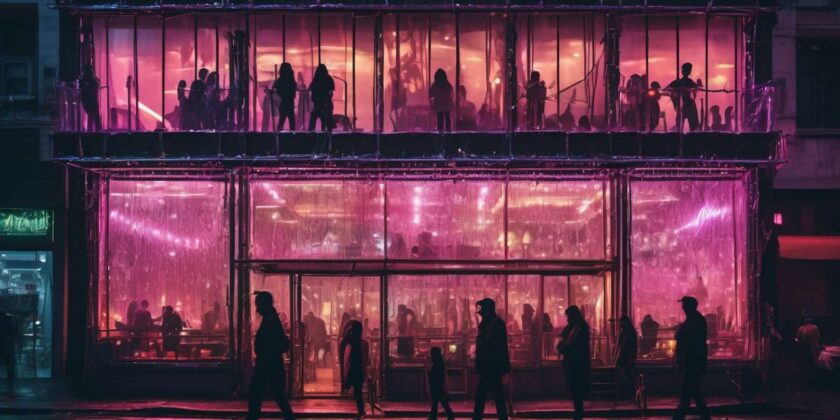
Kaleidoscopes of glass towers and neon signage rise beside aging brick facades.
We find ourselves caught between two cityscapes: one promising revitalization and profit, the other housing long-standing adult venues that anchor local cultures and livelihoods.
As developers pitch sleek mixed-use complexes, established clubs and theaters confront:
- Zoning changes.
- Noise restrictions.
- Sky-high rents that often favor new luxury tenants.
We feel the tension of communities reconfigured by market forces and policy choices, where the rhetoric of “improvement” can erase histories and networks sustained by these spaces.
We consider who benefits when nightlife is repackaged for affluent newcomers, and who loses when venues shutter or sanitize their offerings to survive.
Together we trace the legal, social, and economic pressures reshaping adult-entertainment districts, aiming to understand how redevelopment reorders urban life and what preservation, regulation, or adaptation might mean for diverse stakeholders.
Historical role of venues
Adult venues have long shaped downtown life as economic anchors, social hubs, and flashpoints in debates over morality and urban policy.
They provided steady foot traffic, employment, and late-night commerce when other businesses closed early, helping keep downtowns active outside typical business hours.
These districts created a sense of belonging — a mix of regulars, workers, and neighbors who treated those blocks like common ground rather than fringe space.
Over decades, venues adapted to changing tastes and legal frameworks, negotiating public scrutiny and shifting enforcement.
Tensions rose as nearby development increased.
- Conversations about safety, aesthetics, and property values often singled out adult venues.
- These debates frequently ignored broader economic forces driving change.
Zoning shifts and investment patterns catalyzed many transformations.
Community memories show these places offered important networks of support and informal economies.
- Employment and livelihoods for people with few alternatives.
- Social ties and mutual aid among workers, regulars, and nearby residents.
Acknowledging that history helps create fairer redevelopment decisions.
- Respect people who built and relied on these neighborhoods.
- Pursue inclusive renewal that balances economic development with social equity.
Zoning and land-use shifts
We’ve seen how changes in land‑use rules and permit processes have reshaped where venues can operate, who can invest, and which neighborhoods remain commercially viable.
Zoning maps are being redrawn to favor mixed‑use developments and residential projects, which often:
- Push adult entertainment and other marginal businesses into narrower pockets or out of city cores.
- Reduce commercial diversity by making certain uses nonconforming or harder to permit.
These shifts intersect with gentrification as new residents and developers press for different uses and stricter permit standards, accelerating displacement of longstanding businesses and cultural spaces.
We track regulatory tools that selectively burden certain businesses, including:
- Conditional‑use permits and their discretionary application.
- Buffer requirements that push venues away from schools, parks, or residences.
- Signage, operating‑hours, and nuisance rules that increase compliance costs.
We collaborate with other operators, local advocates, and sympathetic planners to push for transparent processes and fair appeals.
Our shared strategies include:
- Documenting and sharing application timelines and permit requirements.
- Negotiating community benefit agreements that protect both new and existing residents.
- Coordinating legal recourse and appeals when rules are applied unevenly.
- Building coalitions to present evidence of community value and economic contribution.
By sharing knowledge and organizing, we protect the fabric of places that serve varied communities.
In doing so, we resist zoning changes that erase history and livelihoods and seek outcomes that balance neighborhood change with inclusion.
Economic pressures and rents
Rising rents and shifting economic pressures are squeezing venues’ margins and forcing many operators to choose between cutting programming, relocating to less visible areas, or closing altogether.
We’re feeling that squeeze alongside longtime staff and patrons who’ve made these places feel like community hubs.
As gentrification moves in, property values climb and landlords see opportunities to convert spaces to higher-paying uses, so adult entertainment businesses that once fit local zoning face steep increases or eviction.
We recognize the tough choices:
- Accept higher rents that erode pay and production quality.
- Move to marginal neighborhoods where visibility and safety drop.
- Shut doors and lose a shared cultural space.
Together we can take concrete actions:
- Document rent hikes and gather evidence of sudden increases.
- Support legal challenges to abrupt zoning shifts or unfair evictions.
- Build coalitions with small businesses fighting displacement and community organizations.
Protecting these venues isn’t just about commerce — it’s about preserving belonging and livelihoods in a changing city, and insisting redevelopment include fair terms for everyone who calls our neighborhoods home.
Noise and nuisance regulations
Many cities are tightening noise and nuisance regulations, and those rules are disproportionately targeting venues that host performances, late-night gatherings, and community events.
We feel this shift personally when longstanding adult entertainment spots face new limits on hours, amplified sound, and outdoor activity.
These rules often arrive alongside zoning changes tied to gentrification, pushing venues into narrower districts or out of business entirely.
Enforcement can be uneven:
- Complaints from new neighbors trigger inspections and fines, even when existing operations complied for years.
- Operators face unpredictable enforcement rather than consistent application of rules.
We want predictable standards that protect residents while preserving spaces where people belong.
- Clear, narrowly drawn ordinances.
- Reasonable decibel thresholds.
- Transparent complaint and enforcement processes so operators can adapt without fear of arbitrary closure.
We need collaboration between city planners, community groups, and venue operators to craft nuisance rules that balance safety and coexistence, rather than using noise codes as a proxy for removing certain types of businesses.
Community and cultural impact
Many of our city’s venues aren’t just businesses—they’re cultural anchors that shape neighborhoods, provide jobs, and host creative communities.
We see adult entertainment spots as part of a city’s texture — places where performers, staff, and patrons find belonging and livelihood.
When zoning changes push these establishments to the fringes or out entirely, we lose more than a storefront — we fracture networks of artists, technicians, and small suppliers who relied on steady work and social ties.
Gentrification often reframes value in ways that erase histories and displace communities, not only residents.
We need policies that recognize the cultural contribution of diverse nightlife and the informal economies tied to it.
That means creating participatory planning processes where workers and long-term patrons have a voice, protecting mixed-use spaces, and promoting equitable redevelopment that preserves gathering places.
- Examples of policy actions:
- Establish formal advisory seats for nightlife workers and long-term patrons in planning boards.
- Implement zoning overlays that allow mixed commercial-residential uses with flexibility for performance venues and small businesses.
- Offer small-business grants or low-interest loans targeted to cultural and nightlife venues at risk of displacement.
- Create heritage or cultural district designations that recognize and protect long-standing local scenes.
By taking these steps, we keep neighborhoods vibrant and inclusive, ensuring redevelopment doesn’t hollow out the social fabric that gave those places meaning in the first place.
Legal fights and precedents
Many landmark court cases and municipal ordinances have shaped how we regulate and defend venues.
We’ll examine key legal battles, constitutional precedents, and enforcement patterns that influence redevelopment outcomes.
Communities often rally when zoning changes threaten adult entertainment businesses.
They argue for both free expression and fair treatment under the law, pressing courts and municipalities to consider constitutional protections alongside local policy goals.
Courts balance First Amendment protections against the secondary effects doctrine.
This balance allows municipalities to regulate locations without imposing outright bans; those rulings now guide current disputes over where certain uses may locate.
Municipal tools used to steer redevelopment include spacing, buffer, and licensing rules.
- Spacing and buffer requirements (distance from residences, schools, parks)
- Licensing conditions and renewal procedures
- Time, place, and manner restrictions designed to limit secondary effects
Selective enforcement of these rules often mirrors gentrification pressures.
We’ve observed enforcement patterns that disproportionately affect certain businesses and neighborhoods, suggesting regulation can be used as a tool of displacement.
This matters because neighbors, workers, and proprietors share a stake in equitable processes.
We want rules applied consistently so changes aren’t used to push people and enterprises out of communities.
By tracking precedent and enforcement trends, we can better anticipate legal arguments and support vulnerable stakeholders.
- Analyze relevant court decisions to identify constraints on municipal regulation.
- Monitor enforcement patterns for signs of selective application.
- Craft policy approaches that respect constitutional limits while addressing legitimate community concerns.
Goal: push for policies and enforcement practices that are constitutionally sound, transparent, and equitable amid urban change.
Adaptive survival strategies
We’ll explore pragmatic survival strategies venues use—legal defenses, business pivots, community alliances, and operational adjustments—to stay viable during redevelopment pressures.
We organize, share resources, and learn from peers to protect our livelihoods.
When zoning shifts threaten adult entertainment locations, we challenge reinterpretations, document historical use, and negotiate conditional permits rather than relying on protracted litigation.
We diversify revenue:
- Daytime cafés.
- Performance art.
- Private events.
- Merchandise.
These options soften reliance on late-night crowds without erasing identity.
We’re building alliances with neighboring businesses, tenants’ groups and sympathetic residents to show mutual economic value and humanize our staff.
Operationally, we tighten safety, improve storefronts, and adopt clearer codes of conduct so regulators see responsible stewardship.
We pool funds for relocation or leaseholds when redevelopment is inevitable, scouting sites less exposed to gentrification-driven zoning conflicts.
By staying adaptive, transparent and networked, we preserve community roots, maintain dignity for workers and patrons, and improve chances of continuity even as neighborhoods change.
Policy solutions and equity
We should push for equitable policies that protect workers and small operators by combining targeted protections, transparent permitting, and community-driven impact assessments.
We’ll prioritize adult entertainment workers’ safety and livelihoods when revising zoning maps, resisting gentrification-driven exclusions.
- Create fair buffer zones that limit harms without being punitive.
- Grandfather existing venues with clear, enforceable standards.
- Offer relocation assistance when displacement is unavoidable.
We’ll demand permitting processes that are simple, publicly accessible, and sensitive to language and resource barriers so small operators aren’t priced out by red tape.
- Streamline applications and provide translated materials.
- Reduce fees or provide fee waivers for low-revenue operators.
- Offer technical assistance for permit navigation.
We’ll push for labor protections, access to benefits, and partnerships with local organizations to provide legal and financial counseling.
- Support labor rights (wage standards, safe working conditions).
- Expand access to benefits and emergency funds.
- Partner with community groups for outreach and services.
We’ll use community-driven impact assessments to center neighbors, workers, and business owners in decisions, measuring social and economic harms before approving redevelopment.
- Design assessments collaboratively with affected stakeholders.
- Include metrics for economic displacement, safety, and cultural impacts.
- Require mitigation plans for identified harms.
By coordinating land-use policy, anti-displacement measures, and inclusive public engagement, we’ll build neighborhoods where adult entertainment can coexist with change, keeping belonging and equity at the heart of urban renewal.
How do changes in transportation infrastructure (like new transit lines or bike lanes) specifically affect adult venues’ customer patterns and business models?
Question: How do new transit lines or bike lanes change customer patterns and business models?
Key effects of improved transit
-
Widened catchment area: New transit lines increase the geographic area from which customers can reasonably travel, bringing more diverse patrons.
-
Shift in visit timing: Better transit often increases evening and off-peak foot traffic as public transport extends service hours and convenience.
-
Higher walk-in and spontaneous visits: Transit-accessible locations see more casual visits from people already moving through the corridor.
Key effects of bike lanes
-
Increased casual, local visits: Bike lanes encourage short, frequent trips from neighborhood residents and workers.
-
Reduced car parking demand: More customers arriving by bike can lessen the need for car parking and may free curb space.
-
Different purchasing behavior: Cyclists often make smaller, more frequent purchases and value quick service and secure bike parking.
How to adapt business models
-
Adjust hours and staffing.
- Extend evening or off-peak hours if transit brings later traffic.
- Redistribute staffing to match steadier or shifted flows.
-
Offer bike-friendly amenities.
- Provide secure bike racks, lockers, air pumps, or discounts for cyclists.
- Create quick-service options for shorter visits.
-
Revise marketing and outreach.
- Target transit riders with location-specific promotions (nearby station ads, transit apps).
- Emphasize ease of access via public transport and bike in messaging.
-
Rethink pricing and offerings.
- Introduce smaller-ticket items or bundles for frequent local visits.
- Consider dynamic pricing for peak transit times or evening specials.
-
Reconfigure physical space and services.
- Rebalance seating, takeout counters, and display areas to favor quicker turnover if walk-ins increase.
- Reduce dedicated car parking or repurpose curb space for outdoor seating, bike parking, or pick-up zones.
Implementation priorities
- Short term: Add bike parking, adjust staffing patterns, update marketing to highlight transit access.
- Medium term: Test menu/offer changes (smaller items, quick options), pilot evening programming.
- Long term: Reevaluate parking needs, redesign storefront for mixed use (dine-in + pick-up), and integrate with transit-oriented development opportunities.
Bottom line: Improved transit and bike infrastructure typically broaden and diversify customer flows. Adapt by aligning hours, amenities, marketing, pricing, and space with the new patterns to capture increased foot traffic and reduce costs tied to car-oriented infrastructure.
What environmental or public health considerations (e.g., sanitation, indoor air quality, disease prevention) uniquely apply to adult venues and how are they addressed?
Sanitation and surface cleaning
Frequent surface cleaning of common areas and private rooms using appropriate disinfectants.
Accessible handwashing stations and hand sanitizer placed throughout the venue to encourage regular use.
Ventilation and air quality
Robust HVAC and air filtration systems maintained and upgraded as needed (HEPA filters, increased fresh-air exchange).
Airflow management in private rooms and common spaces to reduce aerosol transmission risk.
Private-room protocols
Clear protocols for private rooms including cleaning between uses, time buffers if needed, and discrete entry/exit paths.
Privacy and dignity prioritized in procedures to ensure comfort and consent.
Staff health and training
Regular staff testing and encouragement or facilitation of vaccinations.
Comprehensive training on hygiene, de-escalation, confidentiality, and respectful interaction so staff can enforce policies empathetically.
Safer-sex resources and hygiene policies
Provision of condoms and safer-sex supplies in accessible but discreet locations.
Clear hygiene policies communicated to patrons and staff about expectations and available resources.
Signage and communication
Discreet, dignified signage that communicates hygiene practices, resources, and expectations without stigmatizing patrons.
Confidential communication channels for reporting concerns or requesting assistance.
Partnerships and community support
Partnerships with local health services for outreach, testing events, vaccinations, and referrals.
Anonymous resources and referrals to ensure patrons can access care without compromising privacy.
Overall principle
Respect, dignity, and safety are central: combine infection-control measures with nonjudgmental practices to keep the community safe and supported.
How do licensing fees, inspection schedules, and permitting processes for adult venues compare to those for other late-night businesses such as bars, clubs, or live music venues?
Licensing, inspections, and permits for adult venues are usually stricter and costlier than for bars, clubs, or live music spots.
We face higher fees and more frequent reviews.
- Higher licensing fees.
- More frequent health and safety inspections.
- Regular zoning reviews.
We require tailored permits and additional documentation.
- Specific permits (nudity, alcohol, adult-entertainment).
- Extra documentation and record-keeping.
- Higher liability insurance requirements.
We must manage community and administrative obligations.
- Community notifications and possible public hearings.
- Coordination with local regulators and agencies.
Processes vary by city, but the common experience is longer timelines and greater regulatory scrutiny to stay compliant and connected.
Conclusion
Long-standing adult venues once anchored neighborhoods.
Those venues later faced zoning changes, rising rents, and stricter nuisance rules as cities redeveloped.
These pressures do more than threaten businesses.
- They erode cultural memory, removing places that held local histories and identities.
- They displace workers, who lose livelihoods and benefits tied to those venues.
- They stir legal battles, raising questions about rights, equity, and who gets to shape redevelopment.
If you care about fair redevelopment, support policies that balance multiple priorities.
- Balance safety with respect for existing communities — avoid blanket bans that ignore local context.
- Include meaningful community input — center voices of workers, patrons, and nearby residents.
- Promote economic diversity — preserve a range of businesses rather than homogenizing neighborhoods.
- Help venues adapt — offer technical assistance, zoning flexibility, or financial supports so establishments can meet new standards instead of being pushed out.
Overall, aim for redevelopment that protects public safety while preserving cultural memory, economic opportunity, and equity.