
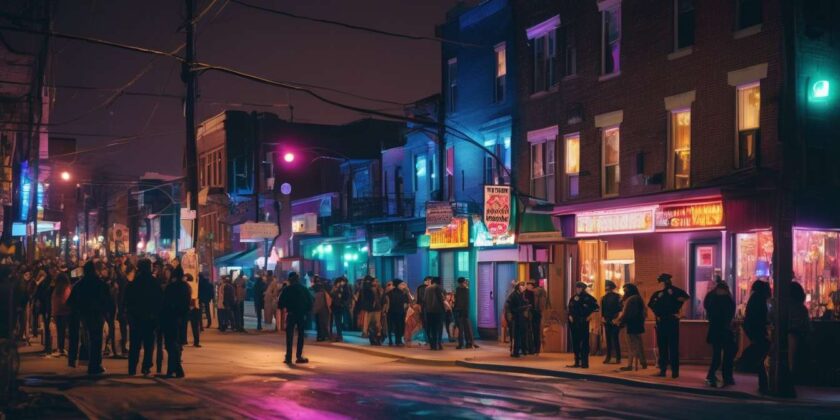
Vexed city councils, neighborhood associations, and business owners now confront a concrete problem: how to zone for adult nightlife districts without sacrificing safety, livability, or economic vitality.
We face competing priorities—public safety, residential quality of life, cultural expression, and urban competitiveness—that pull planners and policymakers in different directions.
As advocates press for concentrated entertainment zones to boost tourism and nightlife economies, residents raise concerns about noise, crime, and displacement.
Regulators must reconcile ambiguous legal frameworks, limited enforcement resources, and divergent outcomes in cities that have tried varied approaches.
We must also consider equity: who benefits from nightlife clustering, and who bears its externalities?
This article examines the policy trade-offs, zoning tools, and governance mechanisms available to mitigate harms while fostering vibrant evening economies.
By mapping real-world examples and evidence-based strategies, we aim to equip stakeholders with the insights needed to design zoning regimes that balance nightlife vitality with community well-being.
Policy Challenges
We face several policy challenges when zoning for adult nightlife districts, including public safety, land-use conflicts, and equitable economic development.
We prioritize mixed-use zoning that balances residential life with entertainment so neighborhoods feel welcoming and safe.
Public safety concerns — noise, late-night transit, and crowd management — are central.
- We craft rules that reduce harm without excluding businesses or residents.
- We design transit and crowd-management strategies to improve late-night safety and accessibility.
We aim for equity in economic development.
- We ensure small owners and workers share benefits instead of displacement that favors large investors.
- We guide investments toward local hiring and fair wages.
We collaborate with community groups to map impacts, set operating standards, and guide investments.
We insist on transparent, participatory processes.
- People who live and work near nightlife zones have a voice and belong to shaping outcomes.
- We avoid one-size-fits-all limits and instead tailor policies that protect residents, support diverse businesses, and spread economic gains.
Overall, our decisions keep safety and fairness at the center while supporting a vibrant, inclusive nighttime economy.
Zoning Models
We outline several zoning models that balance nightlife vibrancy with residential livability, regulatory clarity, and economic inclusion.
We propose a mixed-use zoning approach that codifies where adult nightlife can coexist with housing, retail, and daytime services, so neighbors and businesses feel seen and secure.
We prefer district-based overlay zones that concentrate uses into defined corridors, creating shared expectations and streamlined permitting that reduce conflict and uncertainty.
We support conditional-use frameworks that let communities set tailored standards—hours, buffering, and operations—while preserving pathways for small entrepreneurs to enter the market.
We emphasize procedures that advance equity by prioritizing impacted residents in planning, offering mitigation funds, and preventing displacement through affordable housing and business supports.
We advocate sunset reviews and adaptive management to adjust rules as neighborhoods evolve, and clear metrics to assess outcomes.
Together, these models aim to foster belonging, economic opportunity, and responsible nightlife without sacrificing neighbors’ quality of life or transparent governance.
Public Safety Measures
We’ll prioritize targeted measures—lighting, responsive policing, trained crowd managers, and clear incident-reporting—to keep nightlife districts safe without pushing problems into surrounding neighborhoods.
We want everyone who visits or works in these zones to feel welcome and protected, so we’ll design safety strategies that fit mixed-use zoning contexts where homes, businesses, and nightlife coexist.
We’ll coordinate with local law enforcement, transit agencies, and venue operators to set predictable patrol patterns and rapid-response protocols that respect civil rights and community ties.
We’ll invest in de-escalation training and hire crowd managers from nearby neighborhoods to promote trust and belonging.
We’ll require transparent reporting systems so residents and patrons can report concerns and see follow-up, which strengthens accountability and public safety.
We’ll evaluate outcomes by measuring incidents, perceptions of safety, and equitable distribution of resources, ensuring equity guides decisions.
By combining physical design, trained personnel, and data-driven oversight, we’ll build nightlife districts that feel safe and inclusive for everyone.
Community Impacts
We’ll assess how nightlife districts affect nearby residents’ quality of life, housing affordability, and local businesses so we can mitigate harms and amplify benefits.
We recognize that mixed-use zoning can foster vibrant, walkable neighborhoods, but it also raises concerns about noise, late-night activity, and displacement.
Together, we need clear expectations to protect sleep, safety, and social cohesion:
- Designated hours
- Sound buffering
- Ongoing community input
We’ll prioritize public safety without criminalizing patrons or workers by supporting measures that keep everyone secure:
- Improved lighting
- Better transit access
- Crisis-response services
We’ll insist on equity in permitting and enforcement so smaller, locally rooted businesses and long-term residents aren’t pushed aside by larger operators.
We’ll create avenues for shared stewardship that let us adapt zoning and operations responsively:
- Neighborhood councils
- Regular impact reviews
- Mitigation funds
By centering belonging and fair processes, we can shape nightlife districts that serve diverse community needs while minimizing harms.
Economic Effects
Designated nightlife districts boost local employment, sales tax revenue, and tourism while increasing evening activity that supports nearby businesses.
- When clubs and late-night venues concentrate in a district, they create hospitality and service jobs and increase foot traffic during evening hours.
- This increased activity supports adjacent cafes, shops, and transportation services, and attracts tourists who contribute to sales tax revenue.
Mixed-use zoning helps blend hospitality, retail, and residential uses so community members can work, socialize, and feel included.
- Mixed-use zoning enables co-location of homes, businesses, and entertainment, encouraging walkability and round-the-clock urban life.
- It supports a diversity of business types that serve residents and visitors alike.
There are trade-offs: rising commercial rents and property values can strain long-standing small businesses and residents unless countermeasures are adopted.
- Increased demand for space in thriving nightlife districts often pushes up commercial rents and property values.
- Without revenue-sharing, affordable leasing strategies, or other protections, long-standing small businesses and lower-income residents can be displaced.
Prioritizing public safety measures keeps patrons and neighbors connected and reassured.
- Improve lighting and streetscape design to increase perceived and actual safety.
- Establish policing partnerships and community-based safety programs.
- Provide safe, reliable late-night transit and pedestrian infrastructure.
Equity in planning is essential so economic gains strengthen the neighborhood rather than displace it.
- Distribute revenue benefits across the community, for example through local improvement districts or community benefit agreements.
- Offer workforce training and hiring pipelines so residents capture new job opportunities.
- Include community voices in planning decisions to ensure outcomes reflect local needs and priorities.
Legal and Regulatory Issues
We’ll establish clear, enforceable regulations and permitting processes that balance nightlife vitality with noise control, licensing, and neighborhood livability.
Key elements will include:
- Operating hours: defined time windows that account for mixed-use zoning realities.
- Sound mitigation standards: measurable, enforceable requirements for venues.
- Conditional-use permits: straightforward application processes with clear grounds for approval or denial and an appeal procedure when disputes arise.
We’ll prioritize public safety through coordinated requirements.
Safety measures will include:
- Lighting: standards for exterior and pathway illumination.
- Crowd management plans: capacity limits, queuing, ingress/egress protocols.
- Staffing ratios: minimum trained staff per patron levels.
- Emergency coordination: required liaison and planning with police, fire, and medical services.
We’ll ensure transparent fees, renewal criteria, monitoring, and complaint procedures.
Procedures will include:
- Transparent licensing fees and renewal criteria so operators understand expectations.
- Monitoring and complaint mechanisms that allow residents and businesses to submit concerns and receive timely responses.
- Enforcement protocols that explain violations, penalties, and remediation steps.
We’ll build in anti-discrimination safeguards to ensure equitable access and enforcement.
Safeguards will ensure:
- Fair permitting processes regardless of ownership, clientele, or neighborhood demographics.
- Consistent enforcement to prevent selective application of rules.
- Community engagement to foster shared responsibility among residents, patrons, and workers.
Clear, consistent rules will support vibrant nightlife while protecting neighbors, patrons, and workers.
Equity Considerations
Equity-first permitting and licensing
We’ll design policies that proactively address disparities in permitting and licensing so Nightlife Districts benefit all neighborhoods and residents.
Key actions:
- Ensure licensing and zoning processes don’t favor well‑connected applicants over small operators from marginalized communities.
- Create transparent application criteria, timelines, and appeal processes.
- Provide technical assistance and fee waivers or scaled fees for small and community-based operators.
Mixed-use zoning with affordability incentives
We’ll pair mixed-use zoning with clear affordability incentives so longtime residents and local businesses can share in revitalization rather than get displaced.
Key actions:
- Require or incentivize affordable housing and commercial space within redevelopment projects.
- Use community land trusts, inclusionary zoning, and commercial rent stabilization tools.
- Monitor displacement risk and adjust incentives to prioritize local-serving uses.
Transparent, fair enforcement
We’ll set transparent enforcement standards to prevent selective policing and to build trust between communities and regulators.
Key actions:
- Publish enforcement criteria, complaint processes, and disciplinary outcomes.
- Train inspectors and enforcement staff in bias reduction and community engagement.
- Establish independent review or oversight mechanisms for enforcement decisions.
Public safety that protects rights and dignity
We’ll integrate public safety measures emphasizing crime prevention through environmental design, adequate lighting, and community policing partnerships while protecting civil liberties and reducing stigma.
Key actions:
- Use design interventions (lighting, sightlines, activated ground floors) to deter crime.
- Fund community-led safety programs and formalize partnerships with police that prioritize de‑escalation and civil liberties.
- Avoid measures that criminalize poverty or nightlife culture; monitor impacts on marginalized groups.
Local economic opportunity and workforce development
We’ll create pathways for workforce development and microenterprise support so economic opportunity circulates locally.
Key actions:
- Offer training, small-business incubation, microloans, and contracting preferences for local residents.
- Support culturally specific businesses and creative entrepreneurs with tailored business services.
- Track local hiring and contracting outcomes to ensure benefits remain in the neighborhood.
Impact assessments and adaptive rulemaking
We’ll require impact assessments that measure neighborhood benefits and harms, and we’ll use those findings to adjust rules equitably.
Key actions:
- Conduct regular social, economic, and displacement-impact assessments tied to policy triggers.
- Publish findings and use results to modify zoning, fees, or incentives.
- Incorporate disaggregated data (by race, income, language, etc.) to surface disparate impacts.
Inclusive decision-making and outreach
We’ll invite community representatives into decision-making tables and fund inclusive outreach so everyone feels they belong to and benefits from Nightlife Districts.
Key actions:
- Establish formal community advisory bodies with compensated members and real influence.
- Fund multilingual, accessible outreach and participatory planning sessions.
- Set measurable participation goals and report publicly on how community input shaped decisions.
Implementation Strategies
We’ll phase implementation across clear milestones, assign responsibilities, and set measurable timelines to ensure Nightlife District policies are rolled out efficiently and equitably.
We’ll begin with pilot blocks that blend mixed-use zoning, allowing businesses, housing, and community services to coexist while we monitor impacts.
We’ll convene a cross-sector steering group—residents, business owners, safety officers, and advocacy organizations—to share decision-making and build trust.
We’ll adopt clear permitting steps, training requirements, and investments in lighting, transit, and visible staff to advance public safety without stigmatizing venues.
We’ll collect baseline data and run quarterly reviews, adjusting rules to correct disparities and protect workers and neighbors.
We’ll dedicate funding for community benefits agreements and small-business supports to promote equity and local ownership.
We’ll publish timelines, meeting notes, and outcome metrics so everyone can follow progress and hold implementers accountable.
By moving deliberately, transparently, and inclusively, we’ll create Nightlife Districts that belong to and serve the whole community.
How do residents’ perceptions of nightlife districts change over time after initial implementation?
Early reaction: excitement and novelty.
We initially feel energized by increased activity and more choices for dining, entertainment, and socializing. This phase is marked by curiosity and enthusiasm about the new options the nightlife district brings.
Emerging concerns: noise, safety, and crowds.
As activity intensifies, residents often grow wary about noise, public safety, and congestion. These worries can dominate perceptions until they are acknowledged and addressed.
Stabilization: businesses and regulations take hold.
When local businesses mature and regulations (zoning, licensing, noise controls) are enforced, the district’s operation becomes more predictable. This predictability reduces uncertainty and helps normalize nighttime activity.
Growing acceptance through listening and participation.
Community acceptance increases when authorities and operators solicit input and respond to residents’ needs. Engagement mechanisms (meetings, advisory boards, feedback channels) build trust and a sense of ownership.
Long-term integration: familiarity, infrastructure, and pride.
Over years, familiarity with nightlife patterns, targeted infrastructure improvements (lighting, transport, waste management), and continued community engagement lead residents to feel included and often proud of the neighborhood’s nighttime life.
What are the best practices for measuring late-night noise and nuisance levels specific to adult nightlife venues?
Goal: Measure late-night noise and nuisance at adult nightlife venues using a mixed-methods, transparent approach.
Primary measurement strategy
- Combine continuous sound monitoring with calibrated short-term spot checks.
- Use standardized acoustic metrics: LAeq, L10, and Lmax.
- Control for ambient sources (traffic, trains, construction) when attributing noise to venues.
Spatial and temporal mapping
- Map complaints by time and location to identify hotspots and peak hours.
- Correlate complaint clusters with monitoring data to validate sources and times of highest impact.
Lived-experience data
- Use resident surveys to capture subjective nuisance and frequency/ timing of disturbances.
- Provide optional wearable decibel logs for residents who want to record personal exposure and context.
Quality assurance and transparency
- Calibrate instruments and perform spot checks to validate continuous monitors.
- Report methods, thresholds, and uncertainty clearly so results are reproducible and trusted.
Reporting and mitigation
- Publish transparent thresholds and corresponding mitigation actions so stakeholders understand consequences and remedies.
- Use combined objective and subjective data to propose proportionate mitigations (operational changes, soundproofing, enforcement, community agreements).
Key principles
- Standardization of metrics and protocols for comparability.
- Attribution controls to separate venue noise from ambient sources.
- Inclusivity and transparency so residents, venues, and regulators trust and accept findings.
How can local governments incorporate temporary permits or pilot programs to test nightlife zoning before permanent adoption?
We can pilot temporary permits to test nightlife zoning by issuing time-limited approvals with clear goals, metrics, and community agreements.
We’ll collect noise, safety, economic, and resident-satisfaction data, hold regular stakeholder check-ins, and adjust conditions or hours as needed.
We’ll sunset permits unless extended, provide fast-track renewal for successful pilots, and ensure transparent reporting so everyone feels included in deciding whether temporary measures become permanent.
Conclusion
You’ve seen how zoning for adult nightlife districts forces you to weigh public safety, community impacts, economics, equity and legal limits.
You’ll need to choose a model that balances vibrant night economies with neighborhood wellbeing, enacts clear safety and regulatory standards, and includes affected residents in decisions.
Moving forward, prioritize transparent implementation, data-driven adjustments, and protections for vulnerable groups so the district serves broader civic goals without undermining local quality of life.